
Qualitative potential analysis for rooftop gardens on multi-storey residential buildings in Graz
Green rooftop landscapes contribute to climate protection, improve the thermal performance of buildings and residential areas, and encourage informal exchange and social interaction among residents.
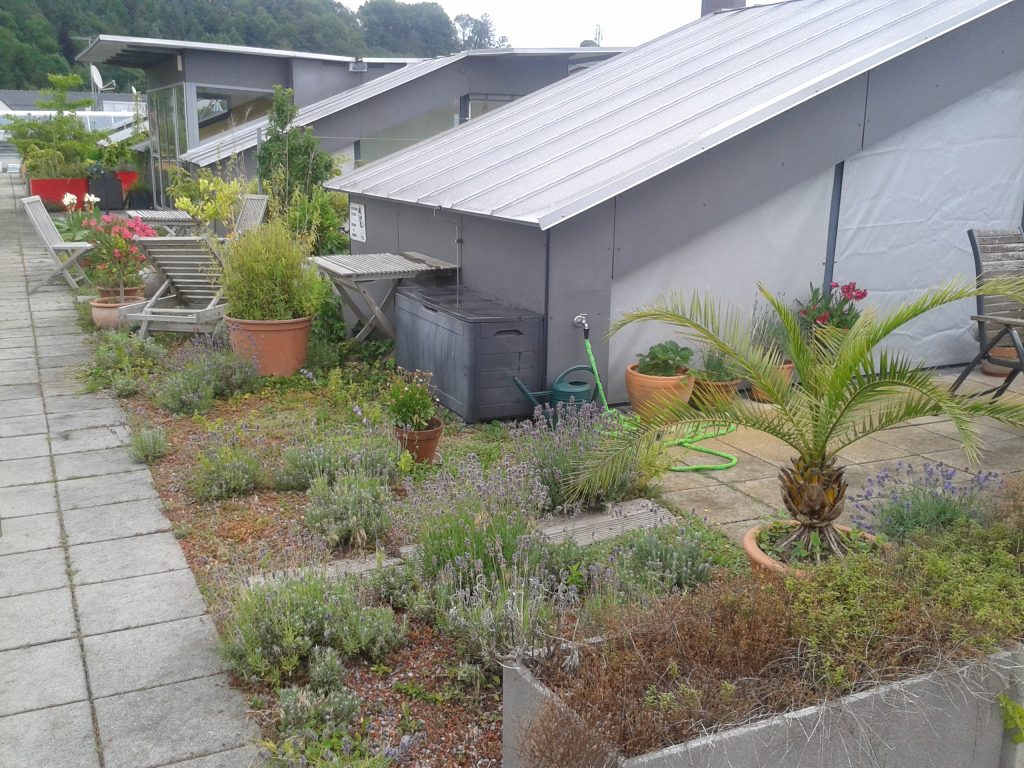
European cities face demographic, climatic and structural changes. Growth and decline occur in parallel: while rural and structurally weaker regions experience decline, urbanisation continues to increase. This brings more sealed surfaces to urban areas and reduces open and green spaces.
Plants and green spaces improve urban living environments, whether in parks, on roofs, on façades or in planters. Urban greenery lowers air temperatures, increases humidity, reduces air pollution, retains rainwater, reduces noise and supports biodiversity through plant and animal habitats. Targeted measures to increase urban greenery, particularly in residential environments, improve quality of life for the whole urban population and can raise awareness of ecological issues.
This study aimed to make an initial assessment of the potential for rooftop gardens on multi-storey residential buildings in Graz. Its findings provide a basis for considering support measures to expand greenery across Graz’s rooftops.